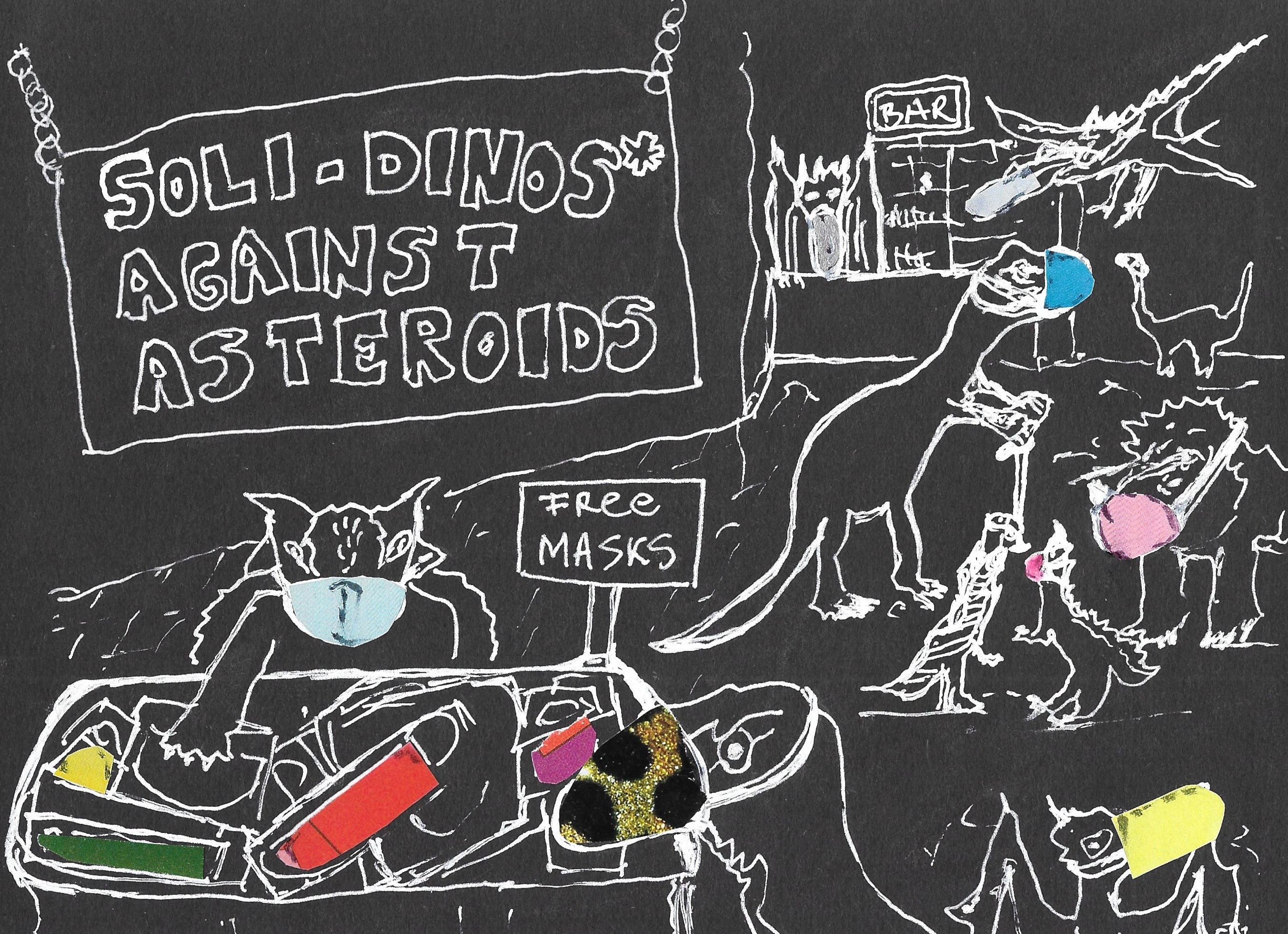
We’re five years into a the COVID pandemic (endemic?). For a time, we as the diverse thing called “the radical left” normalized masking and other COVID precautions at our events, but this has long since stopped being the norm. Some groups who host events have continued to implement policies that aggressively limit the spread of the corona virus, and other have made attempts that lacked follow through.
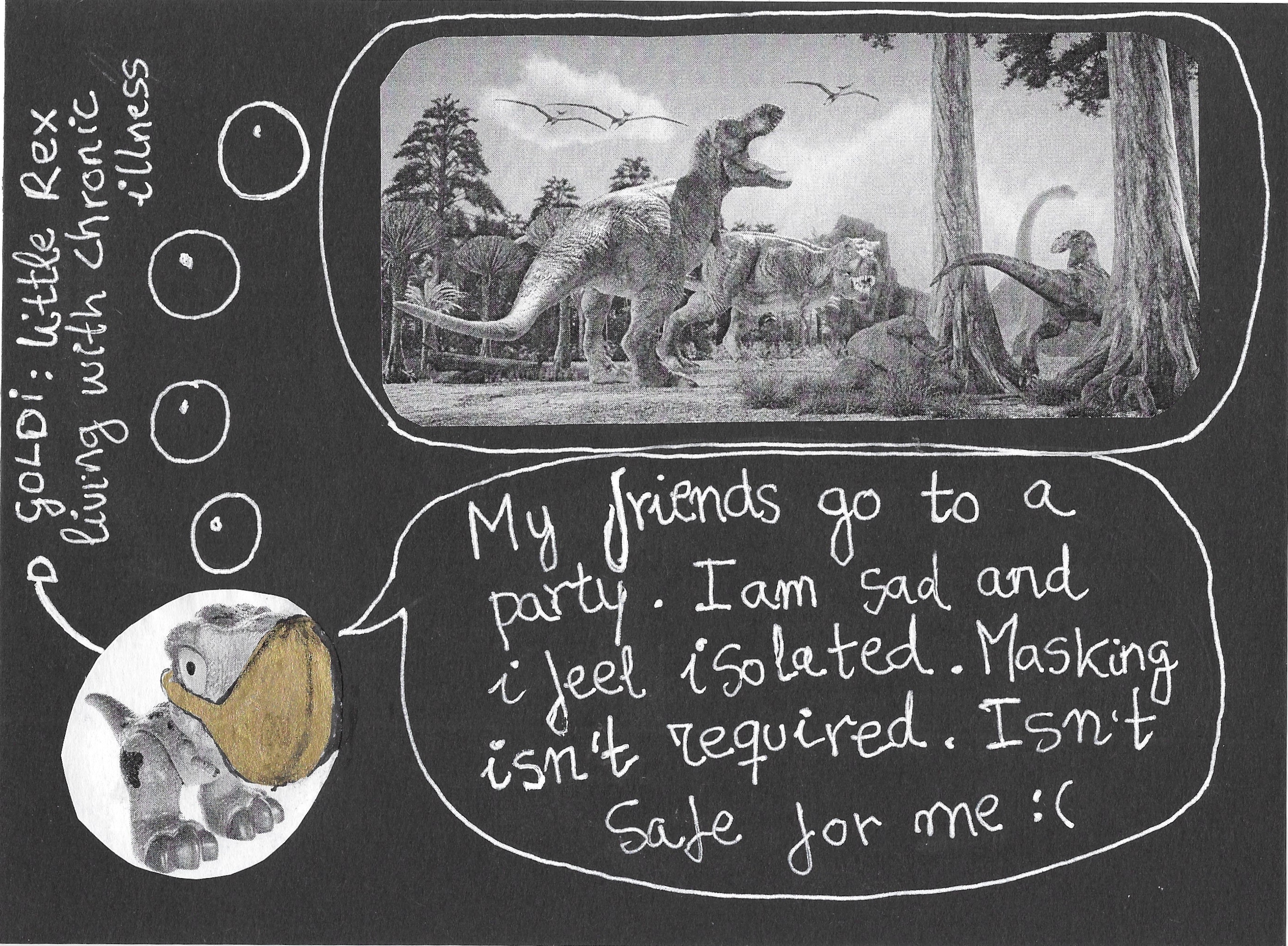
This short guide is here to be a reminder about what actually works at preventing the spread of airborne diseases, and more importantly, it guides you on how to implement these measures for your events.
Let’s get at it then, shall we?
Masking matters most
The corona virus, like many other illnesses, is spread by aerosols. Many of the early pandemic measures, such as maintaining 2 meters separation or placing plexiglass sheets to prevent spray from sneezes from reaching others, are minimally effective.
Quick tests are fairly inaccurate, as they generally only detect people who are obviously sick. This means that, even if these are implemented at large events, there will still be asymptomatic carriers who are spreading the virus. People also frequently don’t use them correctly, which can also lead to false positives.
Some people with chronic health issues can’t even risk going to small events where PCR tests for the corona virus are required, as even those can have false negatives. Another exclusionary factor for some people is that quick tests and PCR tests if offered are typically only for the corona virus, and not all the other illnesses in our shared spaces! Even some of the multi-tests for COVID+flu are not enough for some people, not to mention, they’re quite expensive.
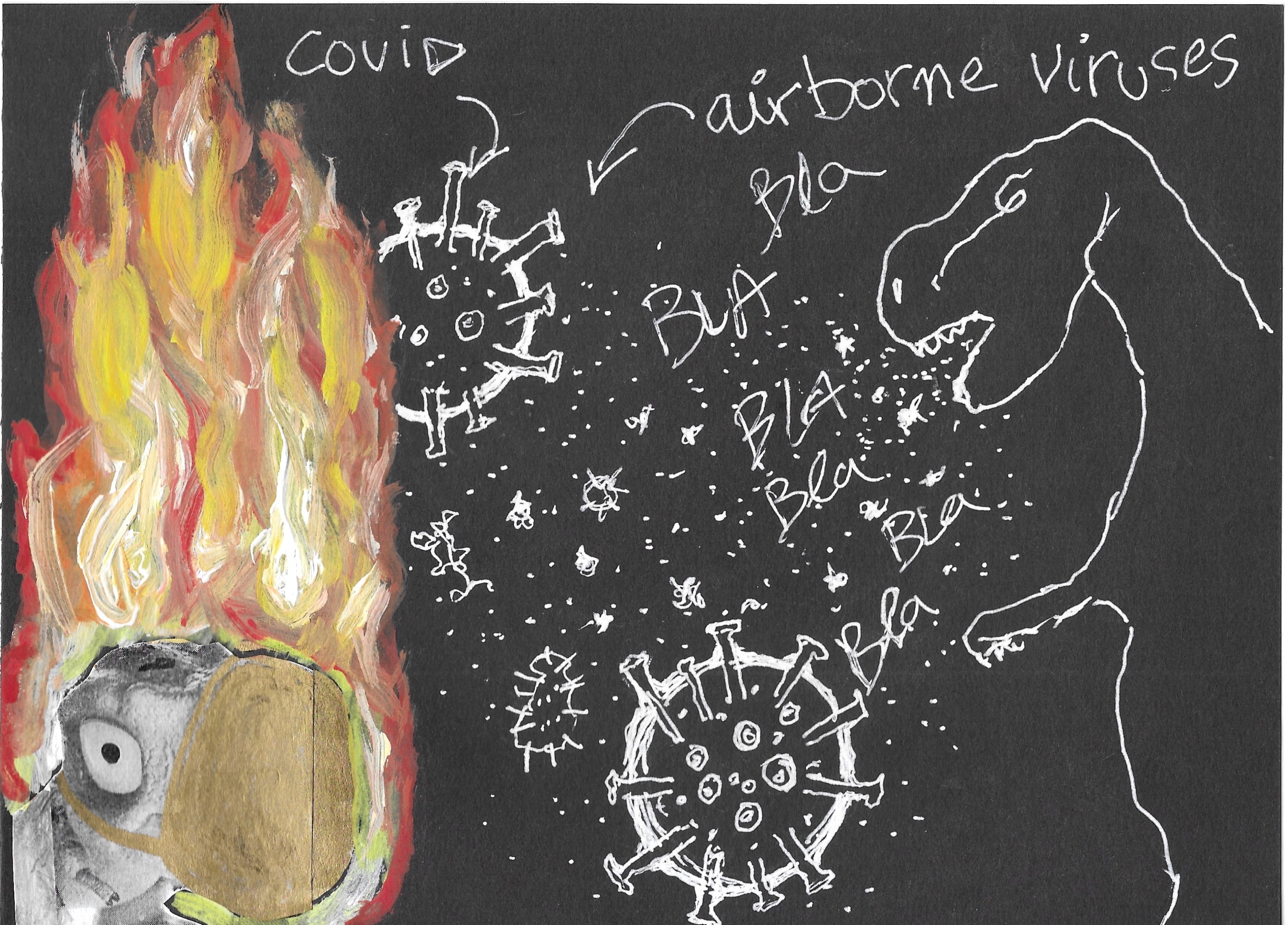
Air filters and open windows help, but above all else, masking must be required to limit the spread of diseases and make events accessible to those with (certain types of) chronic health issues.
Advertise it!
Advertise the measures you will be taking on your event flyers, event descriptions, posts, mass texts, or sharepics. Be specific about what measures you will be taking. For example:
“We require masking for all participants in indoor spaces for the duration of the event.”
“Masks are required, and we will have quick tests for those who want them. Both are provided free of charge at the door.”
“Our event requires masks with the exception of the dining space that will have air filters and open windows.”
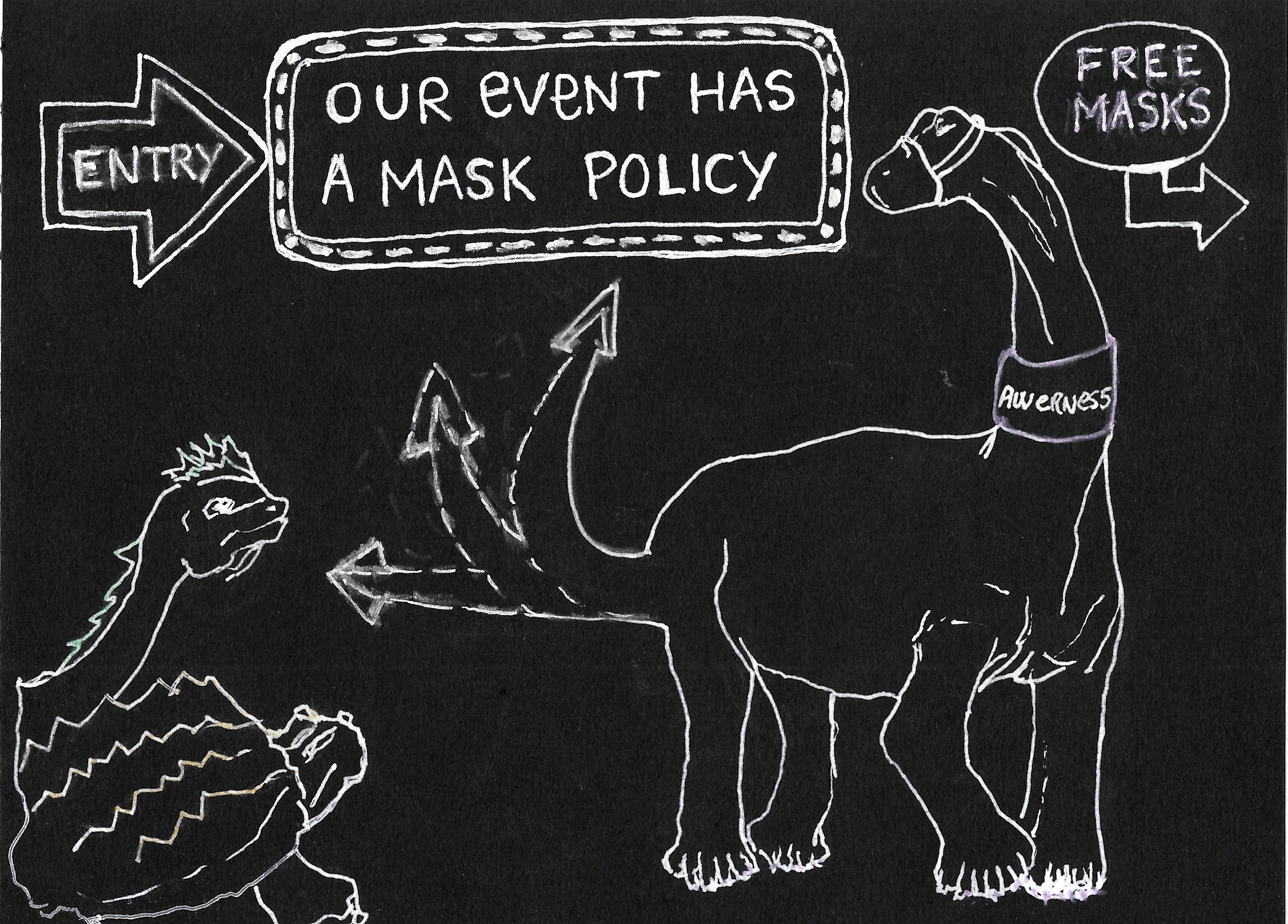
Specificity matters because it will allow people with chronic health issues to determine for themselves if the risk associated with attending the event is acceptable to them.
Avoid using the soft language of suggestion, and instead state boldly what is expected of participants.
DO: “Masks are required at this event.”
DON’T: “We encourage you to mask if you can.”
DON’T: “If you want, wear a mask in solidarity with others.”
Lastly, make sure you tell people who are feeling sick or have had contact with people feeling sick to stay home. It might be the corona virus! Don’t put others at risk! For how much we talk about discouraging people to go to work sick, we are rather silent about people coming to social engagements while sick.
Provide masks and other preventative measures
Because not masking has become so normalized, many people no longer carry a mask with them. Buy enough masks in bulk so that you can provide one to every participant.
Hand sanitizer isn’t a silver bullet, but it helps. Have a few bottles available near the entrance, bathrooms, and places people eat or drink.
Actually enforce your policies
The easiest way to get people to mask is to have everyone involved with the event wearing masks. It’s especially important that organizers wear them the whole time. Autonomous as we may like to call ourselves, we often take our cues from organizers and other “leaders.”
To encourage people to wear masks as they arrive, have a greeter (wearing a mask!) at the entrance. A bit of intentional friendliness and openness could do wonders for the movement at large, but in the case of masking, it is helpful for someone to state that your event has rules that may be unexpected compared to other similar events.
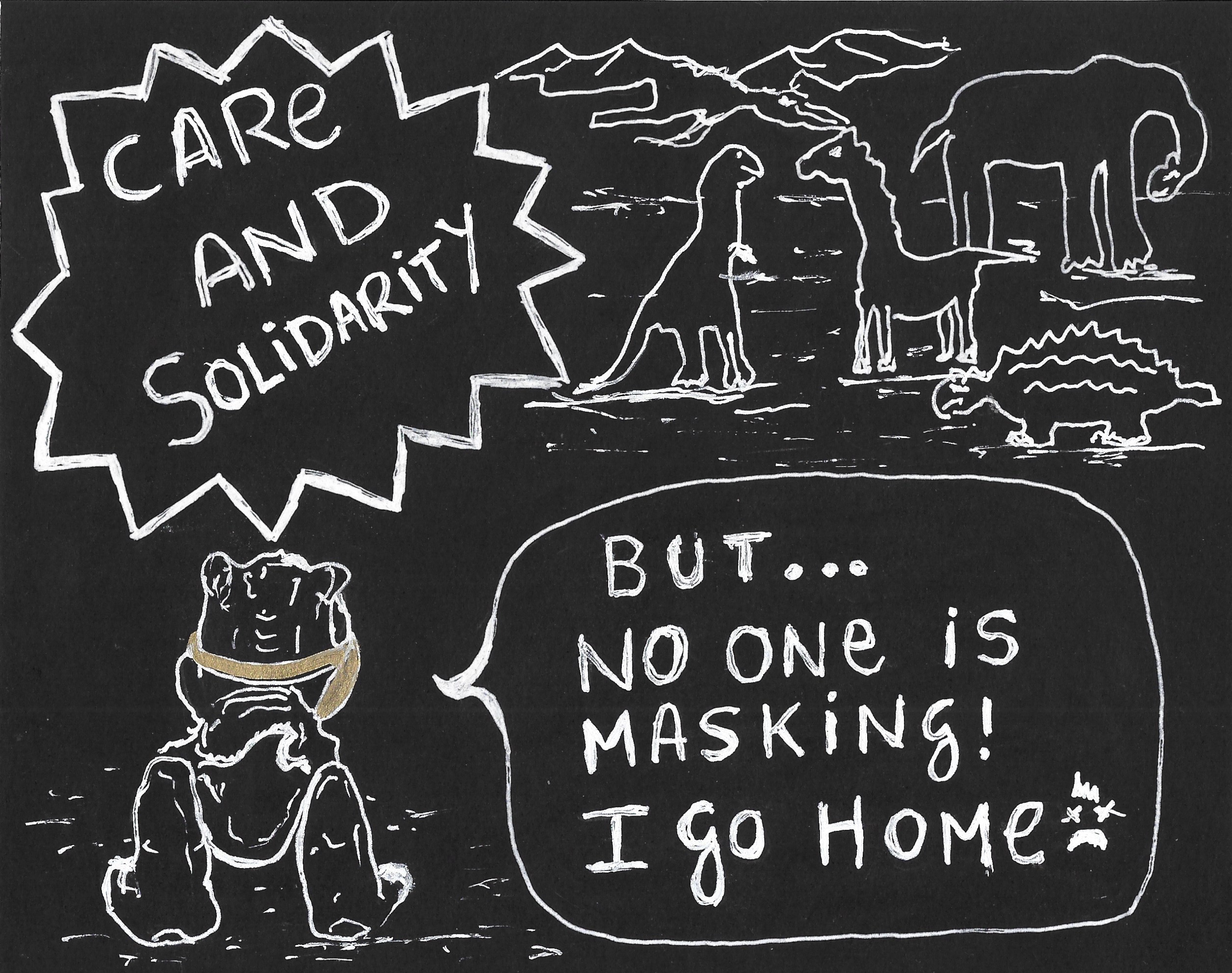
A common argument that we’ve heard heard is, “But nobody likes masking! We can’t actually make them!”
If someone said “We can’t actually stop sexual harassment! Patriarchy is too pervasive,” they would be rightfully criticized.
It will be uncomfortable, but either we believe we can change society’s norms, or we don’t. And if we don’t, what are we even doing anyway?
As a note, neurodivergence is prominent within our social circles, and this includes people with sensory issues. We will always need to make exceptions, but one person’s discomfort does not outweigh another (likely socially isolated because of the pandemic) person’s need to avoid becoming further debilitated or risking literal death. Without being pushy, we can say “If it’s just discomfort, we ask that you endure that during the event to make it accessible for others.”
You have an Awareness Team? Put them to use!
Since they’re so common, let’s assume that Awareness Teams are actually an effective and desirable means of discouraging and encouraging certain behaviors.
First, make sure they mask too!
Second, the Awareness Team has been granted some authority to nudge others toward more desirable behavior. Have them talk to the rule-breakers. When they do, have them be direct rather than couching their request in soft and indirect language.
DO: “Our event has a mask policy. Please put yours on.”
DON’T: “Sorry to be annoying, but I have to ask you to put a mask on.”
DON’T: “I really don’t want to have to say this, but we’re asking people to wear masks here.”

But why all the hubbub about masking?
It is not enough to imagine a future world of care and solidarity. We need to find ways to enact it today. People with chronic health issues deserve to take part in the rest of society instead of hiding away in their (often online) corners with other sickos.
One of the reasons masking has fallen away despite many events advertising some sort of COVID policy is that, to many people, it’s more important that others perceive them as having “good politics” than to actually follow a solidary and altruistic ethos. It’s almost become fashionable for organizers state that they’ve learned from the disabled community, while still organizing events that would exclude them. We as the authors of this zine feel the pull of performative “good politics” too, and it takes deep introspection and hard work to align our beliefs and actions with what is promoted as “good.” Having a consistent ethic based on solidarity can be inconvenient, and it may even require some personal sacrifice.
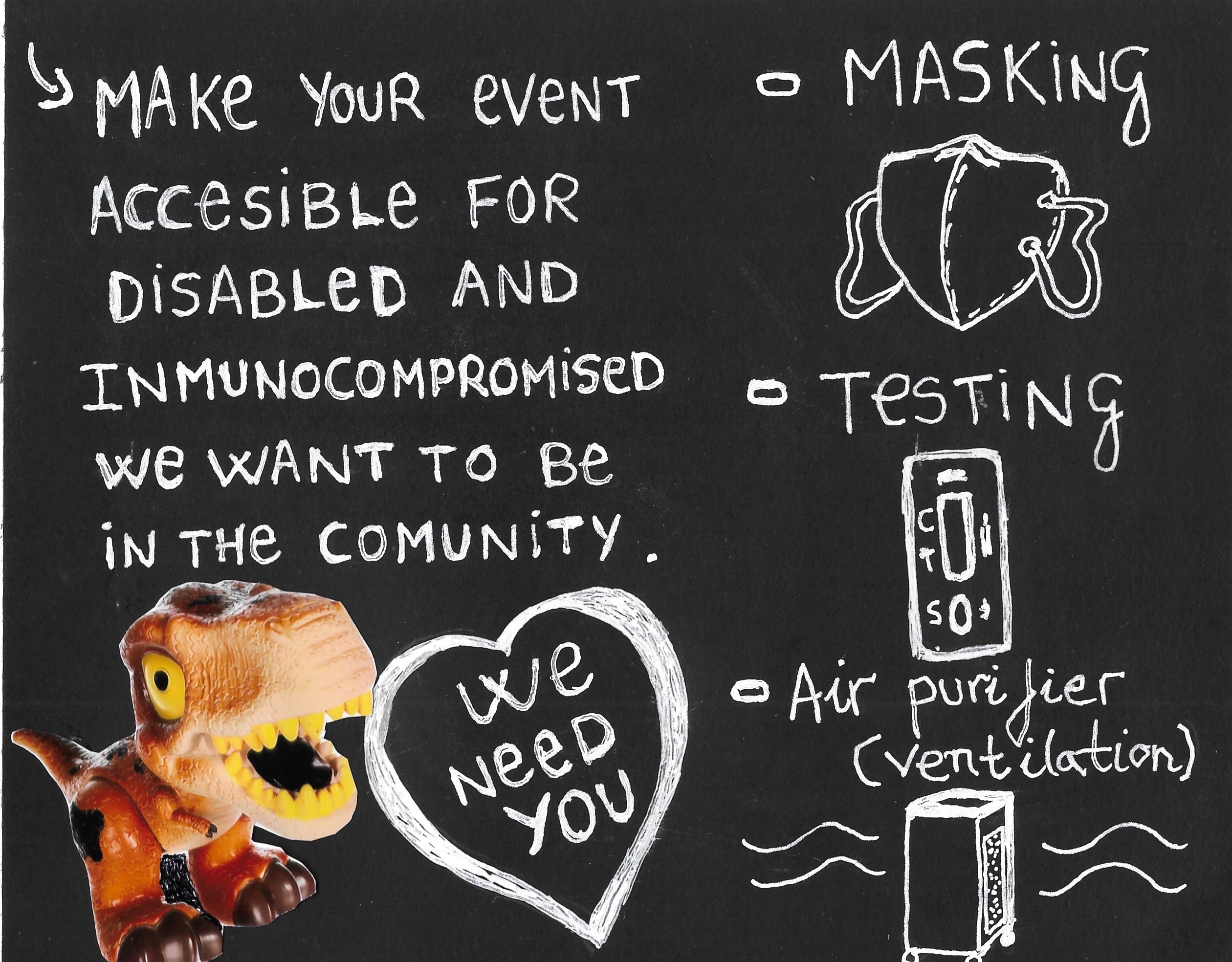
It’s not enough to say that we know and sympathize with the struggles of the marginalized. Actions have to follow words.
Try making masks required at your next event. Think of who will attend that would otherwise be excluded.
Art by Elijah SM / momiamanartist.com